We are always trying to find ways to maintain our presence online and to stay current with our cleints and clients-to-be. Through blog posts, facebook posts, twitter feeds and more, you will never be out of touch with our hospital or miss any important announcements.
For thos who are not yet a member of the West Boca Veterinary Center family, we encourage you to ask around. Friends and neighbors may bring their animals here. We have several review sites online to help provide you with valuable client feedback. You may also check our our veterinary hospital listing on Thumbtack.com.
We look forward to seeing you and your animals soon!
Wednesday, September 5, 2012


Tuesday, August 21, 2012
Cats Need To See the Vet Too!!
Cats Need To See The Vet Too

On average, cats visit the veterinarian less than half as often as dogs. Twice yearly wellness exams are important for cats. Senior and geriatric cats may need even more frequent visits. While cats are healthier indoors overall, it is a mistake to believe that "indoor" cats don't get sick.
Cats are very skilled at masking and hiding illness. Even the most perceptive owner may miss the subtle signs of disease in cats. When your cat visits the veterinarian for a physical examination, these early subtle signs may be detected. Uncovering disease early usually improves your pets prognosis, reduces your cats suffering, and on average, costs you less money.
Below is a list of symptoms your cat may present with if sick. (Courtesy of the CATalyst Council)
1. Changes in interaction
2. Changes in activity
3. Changes in water intake
4. Unexpected weight loss or gain
5. Bad breath
6. Changes in grooming habits
7. Changes in sleeping habits
8. Changes in vocalization
9. Signs of stress
10. Changes in chewing or eating habits
http://www.catalystcouncil.org/resources/health_welfare/
Some owners find it stressful to transport their cats to the veterinarian. Below is a link to some tips to help you make the trip less difficult.
http://www.catalystcouncil.org/resources/health_welfare/cat_carrier_video/
Bring your cat to the veterinarian for regular check ups. Your cat deserves it.

Dr. Kim Simons
West Boca Veterinary Center
www.westbocavet.com
Monday, July 9, 2012
Heat Stroke In Your Pet
An increased body temperature caused by environmental conditions is called heat stroke or hyperthermia. This is a life threatening condition and requires immediate attention. Heatstroke generally occurs:

1. In hot summer weather when dogs are left in hot vehicles.
2. When an animal is left outside in hot/humid conditions without adequate shade.
3. When exercised in hot/humid weather
4. Obesity, airway disease, and breed specifically the brachycephalics, can also predispose an animal to
heatstroke
 Symptoms
1. Pet will appear distressed
2. Panting
3. Restlessness
4. Drooling from nose and or mouth
5. Unsteadiness
6. Gums turn blue, purple or bright red
What To Do
1. Bring your pet into a cool environment
2. Direct a fan on the pet
3. If possible get rectal temperature and record it
4. Begin cooling pet by placing cool wet towels over back of neck, armpits, and groin
5. Transfer to veterinarian immediately

What NOT To Do
1. Do not use cold water or ice for cooling (tap water is most suitable)
2. Do not overcool the pet
3. A reasonable goal of cooling is to get the temperature to 102-103F while transporting your pet
to the vet
4. Do not force your pet to drink water
If you have any questions, please call the office.
Dr. Kim Simons
West Boca Veterinary Center
www.westbocavet.com
561-451-8838

1. In hot summer weather when dogs are left in hot vehicles.
2. When an animal is left outside in hot/humid conditions without adequate shade.
3. When exercised in hot/humid weather
4. Obesity, airway disease, and breed specifically the brachycephalics, can also predispose an animal to
heatstroke

1. Pet will appear distressed
2. Panting
3. Restlessness
4. Drooling from nose and or mouth
5. Unsteadiness
6. Gums turn blue, purple or bright red
What To Do
1. Bring your pet into a cool environment
2. Direct a fan on the pet
3. If possible get rectal temperature and record it
4. Begin cooling pet by placing cool wet towels over back of neck, armpits, and groin
5. Transfer to veterinarian immediately

What NOT To Do
1. Do not use cold water or ice for cooling (tap water is most suitable)
2. Do not overcool the pet
3. A reasonable goal of cooling is to get the temperature to 102-103F while transporting your pet
to the vet
4. Do not force your pet to drink water
If you have any questions, please call the office.
Dr. Kim Simons
West Boca Veterinary Center
www.westbocavet.com
561-451-8838
Wednesday, May 30, 2012
Parvo virus in dogs
|


Friday, February 24, 2012
Canine Pancreatitis

Pancreatitis is a disease process we see often in the hospital primarily with mini schnauzers, however any breed can be affected.
The dog pancreas has two main jobs: secretion of digestive enzymes to help break down the food we eat and the secretion of the enzymes insulin and glucagon to regulate our sugar metabolism.
In pancreatitis, the pancreas becomes inflamed and the enzymes that are normally safely released are now digesting the pancreas itself instead of food. This occurrence results in a metabolic catastrophe that can be life threatening. Secondarily pancreatitis can also lead to diabetes, DIC (bleeding disorder), pancreatic encephalopathy (brain damage), and lung or liver damage.

The classic signs of pancreatitis are appetite loss, vomiting, diarrhea, fever, and pain in the abdomen.
Treatment of pancreatitis includes hydration with electrolyte supplementation, pain management, medication to control vomiting and diarrhea, and antibiotics.
In most cases of pancreatitis we never find out what caused it. Some known causes of pancreatitis are: reflux of intestinal contents into the pancreatic duct, trauma, concurrent hormonal imbalances like diabetes, hypothyroidism, and hypercalcemia (high calcium levels), drugs like sulfas and certain chemotherapy agents, and cancer.
Once dogs have recovered from pancreatitis we keep them maintained on a low fat diet and reevaluate them on a regular basis to make sure that diabetes has not developed.
Dr. Kim Simons
West Boca Veterinary Center
www.westbocavet.com
Friday, February 17, 2012
Inappropriate Urination in Cats

Waking up in the morning to a wet puddle under your foot or a squish in the carpet is never fun. For all of us cat lovers out there, this can happen every once in a while. However, for those of you who are dealing with this situation regularly I have some tips for you.
The most common reason for cats to urinate in places other than the litter box is a cleanliness issue. Cats are very finicky and like things clean. The rule of thumb is scoop your litter box daily and replace litter weekly. Now, this does not mean just top your litter off with fresh litter!! It means remove all of the litter, wash the box out with warm water and soap, and then put in fresh litter. I know some of you out there do the former!
Secondly, have enough litter boxes. The golden rule is to have one more litter box than the number of cats in your household. So, if you have 3 cats.......sorry you need 4 litter boxes (don't hate me).
Cats may also have preferences for types of litter and litter boxes. Some cats like scoopable litter, clay, pine, crystals.....you just have to figure out which one your cat likes. Studies show scoopable litter is preferred by cats specifically Fresh Step. Studies also show that cats prefer large open litter boxes. In addition, cats don't like their litter type changed. This may lead your cat to choose other places to use the restroom. Be consistent with the location of your litter boxes and the type of litter you use.
Lastly, don't forget our older senior/geriatric cats may be painful getting into the litter box due to arthritis. So our older cats should have low walled boxes to make it easier for them.

Dr. Kim Simons
West Boca Veterinary Center
http://www.westbocavet.com/
Monday, February 6, 2012
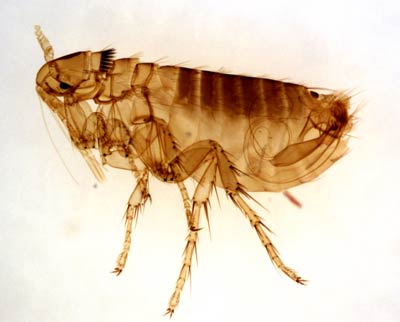
Flea Anemia

With all the advances veterinary medicine has made in the last decade, you would think that flea borne disease would be eradicated. However, we still see cases where our patients are getting sick from fleas.
Fleas can transmit infectious diseases to our dogs and cats, cause mild to life threatening anemia's, transmit tapeworms, and cause significant skin irritation to our pets and humans.
Fleas are parasites that suck blood from their host of choice; in this case my feline patient Katie.
Katie presented to my office with extreme lethargy and just not acting herself. Upon her physical exam I found fleas and flea dirt in her coat.


As I checked her mouth, I noticed that her gums were pale. This is a sign we see when our patients are anemic. Anemia is defined as a reduced number of red blood cells in a pets circulation. Your red blood cells are responsible for carrying oxygen to your tissues. If there are inadequate numbers of these red blood cells you will feel tired and when severe enough will have difficulty breathing from a lack of oxygen carrying red blood cells.
A complete blood count (CBC) and chemistry blood panel were done on Lola. Her CBC supported our clinical findings and demonstrated a pronounced anemia. Katie's PCV was 10%. (normal is about 35%)
Some anemia's can be so severe that a blood transfusion is needed.

Fortunately, Katie did not require a blood transfusion. I treated aggressively with flea control. In this case I used Revolution which is a heartworm preventative, flea and intestinal parasite treatment. This preventative therefore can treat any hookworms that Katie may have had which also contributes to anemia as they are blood sucking parasites as well. In addition, I prescribed a liquid multivitamin to help rebuild red blood cells faster and doxycycline in case Katie also became infected with a flea transmitted infection called hemobartonella. This parasite is a common cause of anemia as well. After only a couple of days, Katie was feeling much better and is more active. She is very lucky. She came very close to needing a transfusion and hospitalization but her owners keen eye prevented that!
Glad you are feeling better Katie!!
KEEP THESE UGLY PARASITES AWAY WITH A GOOD FLEA CONTROL PRODUCT!!
Dr. Kim Simons
West Boca Veterinary Center
www.westbocavet.com
Wednesday, February 1, 2012
Vomiting or Regurgitation-That is the Question.....

"Ralphy" in his feeding chair
Regurgitation is the passive process of bringing up contents from the mouth, pharynx, or esophagus. It will often occur just like a simple burp or urp with no forewarning. In contrast, Vomiting is the forceful and active process of bringing up contents from the stomach and upper intestine. The most notable signs of vomiting are drooling and heaving.
It is of utmost importance that the veterinarian distinguishes between the two as the differential diagnoses are vastly different. This blog will focus on regurgitation.
The most common cause of regurgitation is Megaesophagus. Esophageal Strictures, sliding Hiatal Hernias, and Esophageal Tumors may also cause regurgitation. Megaesophagus can be congenital or it can be as a result of Myasthenia Gravis, Addison's disease and possibly even Hypothyroidism.
Ralphy presented to our hospital with a complaint of regurgitation. He was tested for megaesophagus by X-ray and barium swallow and the results were inconclusive. However, we treated him as such and he responded. (Below is an image of a dogs chest with a megaesophagus.)

Part of the therapy for megaesophagus is to feed your pet upright so gravity helps keep the food down. His owner was dedicated enough to have a feeding chair built for him. As you can see he tolerated it very well!!! (Watch the video above)
Ultimately it turns out that Ralphy most likely had an esophageal stricture secondary to esophagitis that caused his regurgitation. He no longer needs his feeding chair and is a happy boy!!
Dr. Kim Simons
West Boca Veterinary Center
www.westbocavet.com
Tuesday, January 31, 2012
Vestibular Disease in Dogs

The Vestibular System is part of the neurological system that is responsible for perceiving your body's orientation relative to the earth. Basically the vestibular system determines if you are upside down, standing up, falling etc. When this system is disrupted you won't know which way is up, whether or not you are standing up straight or slanted, and you'll feel dizzy. Its like being on a constant roller coaster.
People often confuse/mistake vestibular disease with seizures or strokes.
The symptoms of vestibular disease are:
1. Motion sickness
2. Nystagmus-rapid eye movement---- http://www.youtube.com/watch?v=YeXT0Sss0Hg
3. Circling
4. Head tilt (like Ralphy in the picture above) http://www.youtube.com/watch?v=eqwW81CpUwE&feature=related
5. Falling to one side
6. Stumbling/staggering- http://www.youtube.com/watch?v=T1YNspRvdPE
The causes of vestibular disease are:
1. Middle ear infection
2. Brain lesion
3. Unknown/idiopathic-Old Dog Vestibular Disease (what Ralphy in picture above suffered from)
In Ralphy's case he presented to our hospital with a sudden onset of staggering and falling onto his left side. Within hours he was unable to walk and had rapid eye movement. We diagnosed him with Old Dog Vestibular Disease and treated him for motion sickness. Each day he progressively got better. He is now walking but still has his head tilt (head tilts can persist up to 6 months and sometimes can even be permanent). Below is Ralphy resting comfortably. :)

Dr. Kim Simons
West Boca Veterinary Center
www.westbocavet.com
Sunday, January 29, 2012
First FDA approved oral NSAID for cats

I am happy to announce that the FDA has finally licensed/labelled an oral NSAID (non-steroidal anti-inflammatory) for the use in CATS!!!
This is exciting news and the first of its kind in feline medicine. For far too long, cats haven't had all the medicinal options as we have had for dogs.
This new drug is called Onsior (robenacoxib). This drug is the equivalent to Rimadyl, Deramaxx, Previcox, or Meloxicam in dogs. I am hoping this opens the door for more options for our feline friends when it comes to improving their quality of life and quality of medical care.
Dr. Kim Simons
West Boca Veterinary Center
www.westbocavet.com
Wednesday, January 18, 2012
Dog Ate What Foreign Object????

It is very important that owners "puppy proof" their homes in order to protect your pets from this dangerous problem.
Below is a story about "Lena", a 6 year old mixed breed dog who we discovered ate a "linear foreign body".
"Lena" presented to our hospital with a history of lack of appetite and vomiting of 3 days duration. In addition, when she drank water, she would vomit it right back up. This are typical symptoms of a pet that has an obstruction or blockage from a foreign object.
To help prove an obstruction x-rays were taken after a number of small x-ray visible beads were given to her to eat. As you see below none of the beads move out of the stomach supporting the diagnosis of an obstruction. (The dark areas behind the beads are intestines that are dilated and full of gas further supporting the diagnosis of obstruction.)

It was time for an exploratory surgery to find and remove the foreign object(s) from Lena's gastrointestinal tract. Once in surgery we found a linear foreign object that was stuck and tangled in her stomach and went all the way down into her small intestines. An incision into her stomach and two incisions into her intestines made it possible for us to remove the foreign object!!!

To this day, we do not know exactly what the object is, it appears to be a linear fabric like entity......
Lena is recovering nicely and feeling much better!!!
Kim Simons DVM
If you have any questions about this information or your pet, please give our office a call.
561-451-8838
West Boca Veterinary Center
www.westbocavet.com
Saturday, October 29, 2011
Canine Influenza - Dog Flu
 Canine influenza is a virus that poses a threat to the respiratory health of dogs in the U.S.
Symptoms include a persistent cough, runny nose, watery eyes, lack of appetite and lethargy. The disease is usually mild however can progress to pneumonia in up to 20% of the cases. The virus is fatal in up to 8% of infected dogs.
Those at risk are dogs that come from a shelter, rescue center, breeder or pet store. Dogs that are boarded, attend daycare, training, dog parks or grooming facilities are at increased risk.
The flu vaccine has shown to be effective in decreasing the severity of clinical signs and the spread of the infection. It reduces the duration of clinical signs, viral shedding, and protects against the formation/severity of lung lesions. The vaccine is given twice, 2-4 weeks apart and then yearly as needed.
Should your pet become infected with the flu, there is no specific treatment/cure. Those that are severely affected may require hospitalization and supportive care such as intravenous fluid therapy and antibiotics.
To date, there is no evidence that the dog flu can be transmitted to humans.
Kim Simons DVM
West Boca Veterinary Center
www.westbocavet.com
Monday, October 24, 2011
Heartworm Treatment Shortage

There is currently a shortage on heartworm treatment medication. It is currently unavailable for purchase by hospitals until a dog is diagnosed with heartworm disease. Once diagnosed it may take weeks to months to acquire the product as Merial, the company that produces Immiticide, is having to borrow the European equivalent product. This ultimately leads to our patients being sick for extended periods of time potentially leading to disease complications. Therefore, it is imperative that as dog owners we give our pets MONTHLY heartworm prevention.
Our practice continues to diagnose dogs with deadly heartworm infection each year. Heartworm disease is transmitted by mosquitos and as Florida has a high prevalence of these insects our pets are at increased risk. The cost of treatment for for a 50- pound dog can be $1,000 compared to 12 months of prevention for $95.
To protect your pet from heartworms, click here for coupon/rebate for Trifexis or click here for coupon/rebate for Heartgard Plus.

Dr Kim Simons
West Boca Veterinary Center
www.westbocavet.com
Friday, October 14, 2011
Intestinal Parasites

Intestinal parasites are a common infection of dogs and cats.Roundworms are a type of parasite that can infect our dogs and cats and also pose a threat to humans.
Roundworms are contracted a number of ways:
1. Contaminated soil that harbors the parasite
2. Via embryonic development while in utero (puppy contracts roundworms during pregnancy)
3. Puppies ingest the parasite via the mothers milk
Roundworm infection can lead to vomiting, diarrhea, pot belly appearance, unthriftiness and pneumonia.

Treatment with a number of available products is very effective in resolving the infection.
Human exposure is also a possibility. The infection is more likely in children and pregnant mothers. Roundworm infection in humans can cause " visceral larval migrans". This often leads to migration of the worm into the eyes causing blindness.

Prevention of parasitism is key for your pets health as well as your own. Your pet should be on a monthly heart worm preventative which also contains a intestinal parasiticide. In addition your pets stool should be picked up and disposed of to keep the environment clean.
West Boca Veterinary Center
Kim Simons, DVM
Tuesday, March 22, 2011
New Website Launch Today!
Well, we finally moved servers and relaunched the westbocavet.com website. It is now much more interactive for clients. There is a member's only section with videos, articles and more. You are able to schedule online appointments, register new patients and clients, check your pet's vaccine status, access your pet's medical records, and soooooo much more. We have a huge database of educational topics from flea allergy to skin diseases. There is also a virtual hospital tour! Check out the new format today!
Monday, September 27, 2010
Open House!

I am excited to announce that we will be hosting an Open House on Sunday, November 14th. The times have yet to be finalized, but likely mid-day. We have done an Open House in the past and love to open the hospital for current clients and newcomers alike. You can bring your animals as well. We are working on some sort of animal contest - I'll keep you posted on that one. We will be providing hospital tours, demonstrations, exhibits, food, games, kids activities, face painting, an ice cream truck, tons of free goodies, raffles, and more! If you've ever been interested in what an animal hospital looks like behind the scenes, or curious about companion animal medicine, looking at x-rays, surgical demonstrations, dental cleaning demonstrations or anything to do with veterinary medicine, then you'll enjoy what we have in store for you! Our hospital is founded on a family-oriented philosophy, and being able to share with you our day-to-day operations as well as provide you with information on what our hospital can do for your pets is awesome! It is definitely a fun few hours. Try to stop by - even if just for a few minutes! See you there!
Gregg Kuehnel DVM
West Boca Veterinary Center
Tuesday, September 7, 2010
"Keola" in need of Total Hip Replacement
 Sometimes we may get more than we anticipate...and it can be heartbreaking. Such is the case with Keola, a young Golden Doodle recently adopted by one of our clients. Keola is a young one and a half year old doodle that has been previously diagnosed with crippling advanced stage hip dysplasia. This has led her to be in constant discomfort beyond what can be helped with joint supplements and pain medications. Her adpoted parents are looking into surgical options for her including a total hip replacement to be done at the University of Florida College of Veterinary Medicine. Surgery is planned for this December, but will be a huge financial burden for her new parents. Through the Doodle Rescue Service where Keola was adopted, her new parents are raising funds to help defray some of the surgical costs. To learn more about Keola's condition, please follow the link: http://doodlemessenger.webs.com/doodleinneedkeola.htm . If you would graciously like to donate to helping Keola, please contact our office at 561.451.8838. Keola is far too young to have to suffer from such a debilitating and correctable condition. We hope she can get her surgery soon and be on her way to recovery! Best wishes Keola!
Gregg Kuehnel DVM
West Boca Veterinary Center
Friday, September 3, 2010
The World Of Blogging
It was suggested by a few right-minded clients that our hospital should enter the world of blogging. So, here we are, jumping feet first into a new world of hospital communication. The intended purpose of this blog is to share stories of animals that have become part of our family as well as provide some medical advice for those of you out there that happen to be reading the various posts. I hope this becomes a frequently updated blog and provides interest to you. If you have any suggestions about content please let me know.
Gregg Kuehnel DVM
West Boca Veterinary Center
Gregg Kuehnel DVM
West Boca Veterinary Center
Subscribe to:
Posts (Atom)